Precision Handling: Replacing Worn Steering Ball Joints and Track Rod Ends
Date Released: 3 Apr 2026 Category: Blog
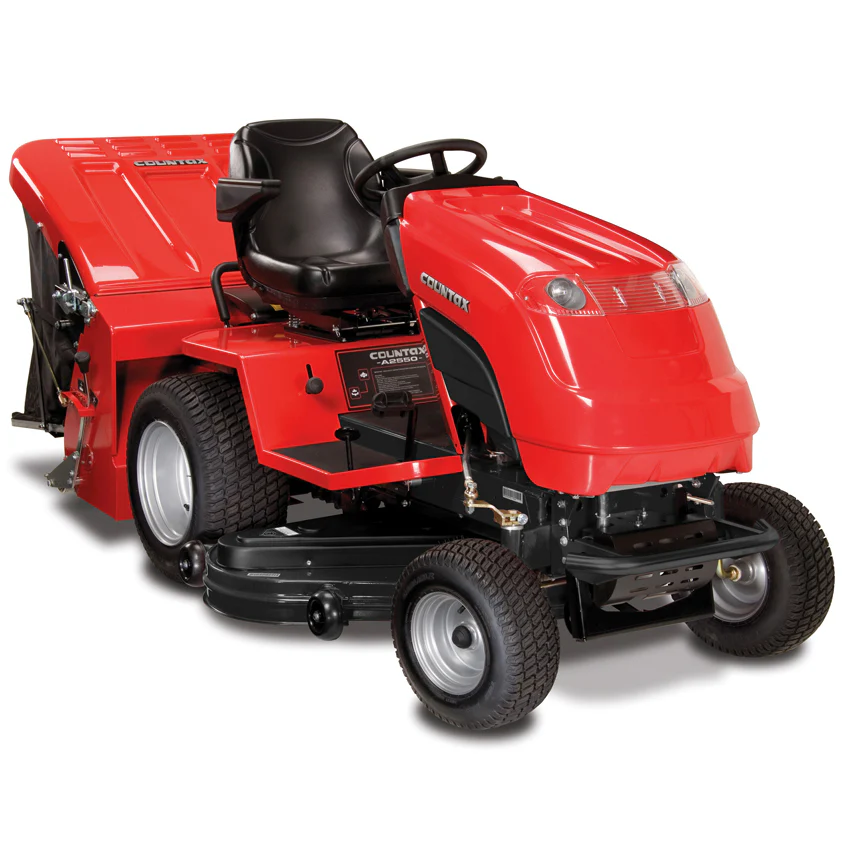
If you drive a Countax, you know it is a heavy, substantial piece of British engineering. Whether you are navigating a tight orchard or mowing around complex flower beds, the steering should feel firm, predictable, and accurate. Because these machines are designed to carry a heavy engine at the front and a Power Take-Off system at the rear, the front axle and steering components are under constant pressure.
However, after a few seasons of work—especially after a wet spring where the ground is soft and uneven—the steering can start to develop "play." You might notice that you have to turn the steering wheel several inches before the front tyres actually react, or perhaps the front wheels seem to "shiver" when you drive across a gravel path.
In the trade, we call this "sloppy steering," and it is almost always caused by wear in the Ball Joints and Track Rod Ends. These small but vital components are the "elbows" of your tractor’s steering system. In this guide, we will look at how to spot the signs of wear and how a simple steering refresh can make your Countax feel like a brand-new machine.
Inside each ball joint is a steel ball sitting in a nylon or metal socket, protected by a rubber "dust boot." Over time, three things happen:
The Boot Perishes: In the UK climate, the rubber boots can crack. This allows grit and water to get inside the joint. The Grease Dries Out: Once the factory grease is contaminated with garden debris, it acts like sandpaper, grinding away the ball and the socket. The Gap Grows: As the metal wears away, a gap forms. This gap is what creates the "clunk" and the "wobble" you feel through the steering wheel.
The "Wiggle" Test: With the engine off, sit on the tractor and gently move the steering wheel back and forth. Watch the front wheels. If the steering wheel moves significantly but the tyres stay still, the joints are worn. The "Hand" Test: Reach down and grab the long metal rods (the drag link and track rod) connected to the front wheels. Give them a firm shake. If you can feel or hear a "click-click" movement at the ends of the rods, those ball joints have reached the end of their life. Check the "Toe-In": Stand in front of the tractor and look at the front tyres. They should be almost parallel. If the front of the tyres are pointing away from each other (like a duck's feet), it is a sign that the track rod ends have stretched or worn so much that the alignment is lost.

Most importantly, a failed ball joint can be a safety risk. If a joint "pops out" while you are driving down a slope or near a ditch, you will lose all control of the steering. At Countax Tractor Spares, we always recommend replacing ball joints in pairs. If the left one has worn out, the right one is usually not far behind.
Track Rod Ends: These are the joints at the very end of the bar that connects the two front wheels together. Drag Links: This is the longer rod that connects the steering rack (under the dashboard) to the front axle. Left-Hand vs. Right-Hand Threads: Be careful! Some Countax steering rods use a "left-hand thread" on one end and a "right-hand thread" on the other so that you can adjust the length by spinning the rod. Always check which one you need before ordering.
Using genuine or high-quality replacement Ball Joints and Rod Ends from our shop ensures that the threads match perfectly and the steel is strong enough to handle the weight of a fully loaded Countax.
Count the Turns: When you unscrew the old ball joint from the rod, count exactly how many full rotations it takes to remove it. When you screw the new one on, use the same number of turns. This keeps your wheel alignment roughly correct until you can fine-tune it. Copper Grease is Your Friend: When fitting the new joints, put a small amount of copper grease on the threads. This will prevent them from rusting solid, making any future adjustments much easier. Don't Forget the Stub Axle: While you have the steering disconnected, check the Stub Axles (the vertical pins the wheels sit on). If these are dry, give them a good pump of fresh grease through the "nipple" on the axle beam.
Don't let a "wobbly" front end ruin your summer stripes. Whether you need a single Ball Joint, a new Drag Link, or a complete Steering Bush Kit, you can find the exact parts for your Countax model at Countax Tractor Spares.
However, after a few seasons of work—especially after a wet spring where the ground is soft and uneven—the steering can start to develop "play." You might notice that you have to turn the steering wheel several inches before the front tyres actually react, or perhaps the front wheels seem to "shiver" when you drive across a gravel path.
In the trade, we call this "sloppy steering," and it is almost always caused by wear in the Ball Joints and Track Rod Ends. These small but vital components are the "elbows" of your tractor’s steering system. In this guide, we will look at how to spot the signs of wear and how a simple steering refresh can make your Countax feel like a brand-new machine.
Why Countax Steering Wears Out
The steering system on a Countax (especially the popular C and K Series) uses a series of metal rods connected by ball joints. These joints allow the steering arms to move up and down with the suspension while still turning the wheels left and right.Inside each ball joint is a steel ball sitting in a nylon or metal socket, protected by a rubber "dust boot." Over time, three things happen:
The Two-Minute Steering Health Check
You do not need to be a mechanic to check if your steering joints are shot. Follow these three simple steps:Why You Should Replace Them Sooner Rather Than Later
It is tempting to ignore a bit of steering wobble, but "sloppy" steering causes a chain reaction of problems. Firstly, it makes the tractor much harder to drive in a straight line, which ruins your stripes. Secondly, it causes the front tyres to "scrub" against the ground, wearing out your expensive rubber tyres in a single season.Most importantly, a failed ball joint can be a safety risk. If a joint "pops out" while you are driving down a slope or near a ditch, you will lose all control of the steering. At Countax Tractor Spares, we always recommend replacing ball joints in pairs. If the left one has worn out, the right one is usually not far behind.
Selecting the Right Parts
Countax has used a few different steering setups over the years, so it is important to identify your specific model.Using genuine or high-quality replacement Ball Joints and Rod Ends from our shop ensures that the threads match perfectly and the steel is strong enough to handle the weight of a fully loaded Countax.
Pro Tips for a Smooth Repair
Replacing a ball joint is a satisfying DIY project. Here are a few tips to make the job easier:Conclusion
A Countax is a precision machine, and it deserves to handle like one. If your steering has become a chore rather than a pleasure, a quick afternoon spent refreshing your ball joints and track rod ends will transform your mowing experience.Don't let a "wobbly" front end ruin your summer stripes. Whether you need a single Ball Joint, a new Drag Link, or a complete Steering Bush Kit, you can find the exact parts for your Countax model at Countax Tractor Spares.