Five Minutes After Every Cut: Why Cleaning Your Countax is One of the Best Things You Can Do For It
Date Released: 2 May 2026 Category: Blog
Cleaning a lawn tractor might not be the most glamorous part of owning one, and it's easy to put away after a mowing session and tell yourself you'll deal with it next time. Most of us have done it. But the machines that last longest and give the least trouble tend to belong to owners who have made a quick clean-down part of their mowing routine, and once you understand why it matters, it's hard to argue with the logic.
This isn't about keeping the machine looking nice, although that's a pleasant side effect. It's about what happens to grass clippings, moisture, and debris when they're left on and around the machine between uses.

A deck that's cleaned after each use will last significantly longer than one that's allowed to accumulate layer upon layer of compacted, dried clippings across a season. That compacted grass also affects performance, as a clogged deck disrupts the airflow that lifts the grass before cutting and causes the quality of the cut to deteriorate over time.
Clearing it after each cut, while it's still fresh and relatively loose, takes only a few minutes. A stiff brush, a blunt scraper, or simply a piece of wood will shift it easily before it has a chance to set. Leave it for several sessions and you'll be scraping at something far more stubborn.
With the machine switched off and the ignition key removed, tipping the deck to access the underside or simply crouching down with a torch to see what's accumulated is a quick and worthwhile habit to develop.
A gentle brush or a blast of compressed air around the engine area clears the fins and keeps airflow unrestricted. It takes very little time and is one of those small habits that makes a quiet but meaningful difference.
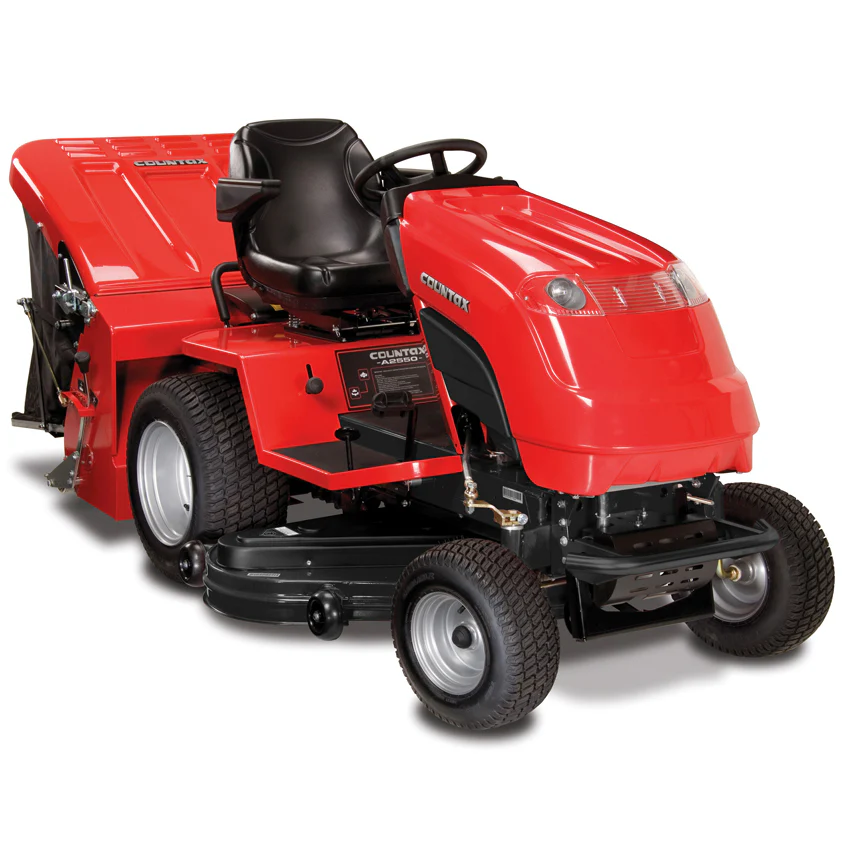
The grass collection system is also worth a quick rinse when it's particularly caked with wet clippings. A clean collector works more efficiently than a blocked one, and it's less likely to develop the kind of smell that can build up when damp organic material is left in a confined space.
A Countax is a well-built machine designed to last for many years with reasonable care. Keeping it clean is one of the simplest and most cost-effective ways to make sure it does exactly that.
This isn't about keeping the machine looking nice, although that's a pleasant side effect. It's about what happens to grass clippings, moisture, and debris when they're left on and around the machine between uses.
What Grass Actually Does to a Mower
Fresh grass clippings are wet, full of sap, and surprisingly corrosive over time. When they're left sitting against metal surfaces, they hold moisture against the material and accelerate rust in a way that dry, clean metal simply wouldn't experience. The underside of the cutting deck, which is exposed to the highest concentration of clippings during every mowing session, is particularly vulnerable.A deck that's cleaned after each use will last significantly longer than one that's allowed to accumulate layer upon layer of compacted, dried clippings across a season. That compacted grass also affects performance, as a clogged deck disrupts the airflow that lifts the grass before cutting and causes the quality of the cut to deteriorate over time.
Under the Deck
The underside of the cutting deck deserves particular attention, both because it accumulates the most material and because it's the area most owners are least likely to look at. Grass builds up quickly in the space around the blades, packing into a dense layer that bakes on in warm weather and becomes progressively harder to remove.Clearing it after each cut, while it's still fresh and relatively loose, takes only a few minutes. A stiff brush, a blunt scraper, or simply a piece of wood will shift it easily before it has a chance to set. Leave it for several sessions and you'll be scraping at something far more stubborn.
With the machine switched off and the ignition key removed, tipping the deck to access the underside or simply crouching down with a torch to see what's accumulated is a quick and worthwhile habit to develop.
Around the Engine
Grass clippings and debris that settle around the engine are worth clearing for a different reason. The engine needs airflow to cool itself during operation, and a build-up of material around the cooling fins and air intake can restrict that flow, causing the engine to run hotter than it should. Over a long, hot mowing season, consistently elevated running temperatures take their toll on engine components in ways that aren't always immediately obvious but shorten service life over time.A gentle brush or a blast of compressed air around the engine area clears the fins and keeps airflow unrestricted. It takes very little time and is one of those small habits that makes a quiet but meaningful difference.
The Rest of the Machine
The body of the tractor, the bonnet, the seat surround, and the footplate, all benefit from a wipe down after use. Grass juice and sap left on painted surfaces can stain and, over time, affect the finish. More practically, keeping surfaces clean makes it much easier to spot anything that needs attention, a crack, a loose fitting, or an oil seep, before it develops into a problem.The grass collection system is also worth a quick rinse when it's particularly caked with wet clippings. A clean collector works more efficiently than a blocked one, and it's less likely to develop the kind of smell that can build up when damp organic material is left in a confined space.
Making It a Habit
The most effective approach is to build the clean-down into the end of every mowing session so that it becomes automatic rather than optional. Put the mower away, clear under the deck, brush around the engine, wipe down the body, and you're done. It adds perhaps five to ten minutes to the process, and the cumulative benefit over a season, and over the life of the machine, is considerable.A Countax is a well-built machine designed to last for many years with reasonable care. Keeping it clean is one of the simplest and most cost-effective ways to make sure it does exactly that.